Learning to Type
what's in a name?

As long as humans have roamed the earth, they have categorized their fellow creatures. Lest we subscribe to the conceit that this is a peculiarly human ability, most birds and mammals do the same thing (and for all I know, so do ants). Through careful experimentation, psychologists and biologists have shown that a dopey pigeon from the ledge outside my office window is as capable of setting up and recognizing categories as is the guy who sells you milk (skim or whole?) at the local convenience store. Maybe more. The main difference seems to be (and I’m not fully convinced of this) that we humans assign written and spoken names, in our language of choice, to the types of creatures, whereas other animals are stuck with only some sort of mental image.
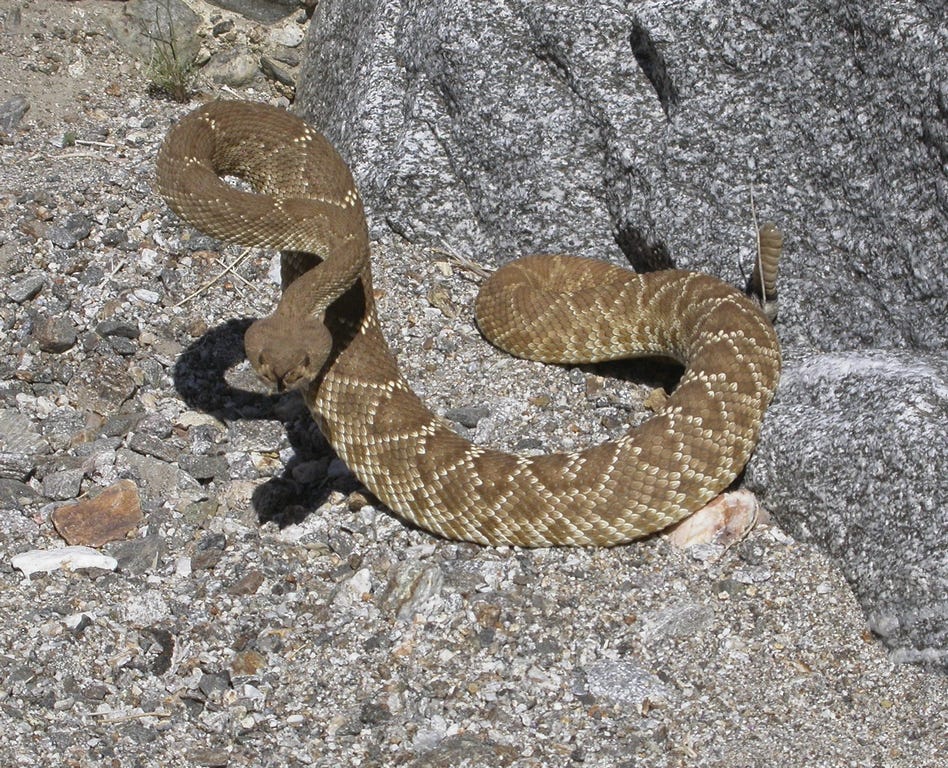
So when Linnaeus invented his system for categorizing the different kinds of creatures, he didn’t start something that hadn’t been going on since the Pleistocene Era. He merely set up some standards of similarity for deciding what was a different kind of organism, called each kind a species, and arranged all species into a hierarchy of categories, like boxes within boxes. What separated Linnaeus’ classification from others was that each of the higher categories was also based on shared similarities. He thereby invented the science of biological taxonomy. This allowed him to use only a simple, two-part name for every species, because the species could be uniquely placed within this categorical hierarchy by higher-level names. So now, instead of naming the Mojave rattlesnake by its attributes (spade-headed, brownish, long fanged, diamond-marked, slit-pupil, sure-to-kill poisonous snake with loose rattles at the hind end), we can refer to it merely by the name of the genus and species to which it belongs, Crotalus stutulatus.
Linnaeus knew nothing of evolution. Like others of his era, he believed that all creatures were god’s creations (hence creatures), and that there was some ideal version of each creature somewhere in the ether, of which every earthly representation was a mere imperfect approximation. Therefore, there existed for him the notion of a type, and we can fairly refer to Linneaus’ system of classification as typological. This is probably the origin of the practice of choosing a single specimen of each new species, and describing it as the representative of all members of this species. If other individuals didn’t conform exactly to this description, well, they were just less perfect specimens, their tough luck. God didn’t always take adequate care in making replicates. Members of a species might be somewhat variable as a result, but the species didn’t change. In his early years, Linnaeus believed each species was the permanent and unchanging creation of god, a real entity.
Later in his life, the reality of hybridization dawned on him, and he came to believe that the variety of plants god put in the Garden of Eden had increased through hybridization since the creation. In no way, however, did Linnaeus ever consider that creatures might change in an open-ended fashion, without a divine plan. Had Linnaeus ever had this thought, he would have been appalled at himself. No, to Linnaeus, to study nature was to discover god’s plan. And discover Linnaeus did, carrying his Systema Naturae through ten editions, the first nine dealing with the classification of plants, and the tenth finally including animals. Systema Naturae is the rock foundation of modern classification, elbowing all previous classifications into the dustbin of history.
That was before Darwin and Wallace upset this comforting permanence with the idea of evolution. Not only did they show that creatures changed through time, but also that the variation within species was not merely annoying imperfection, but the very stuff upon which evolution acted. Nature selected from the wide array of variants within each species to determine whose offspring would inherit more of the earth and whose would inherit less. Worse yet, the offspring of one type might thrive over here and at this time, whereas the offspring of another might thrive over there or another time. And of course, these shifting fortunes brought change to the species. Where Linneaus’ world-view was one of order, permanence and structure, Darwin and Wallace’s was one that was ever-shifting, where new kinds of creatures could arise and perish, a picture of struggle and hapless victim-hood.
Twentieth century biology placed the revolutionary ideas of Darwin and Wallace on a genetic footing, and drew genetic boundaries around species that replaced the typological ideas of Linneaus. Species were no longer cuticle and hemolymph representations of an ideal type, but were now recognized as all the members of a gene pool, that is, all the creatures that could exchange genes with one another, no matter how different they might seem (I need to caution that other definitions of species exist).
Molecular genetics has allowed taxonomists to sort this pool into genetic puddles, variation on a fine scale. When a modern species includes all of the variation within a gene pool, you would expect that the manner in which taxonomists name and describe species would change, wouldn’t you? Yes, you would. But you would be wrong. The process differs little from how it was carried out in Linneaus’ day. The collision between the type-thinking of Linneaus’ system and the fluid, uncertain shiftiness of modern evolutionary thinking simply didn’t happen. Or more exactly, it was a glancing blow that left much of typological taxonomy intact. Yes, it gave a new flavor and purpose to the arrangement of the higher categories, because these could now be arranged to reflect the evolutionary family tree, but this was a minor change because in most cases similarity of form predicts lineage anyway, and Linnaeus had already made similarity the basis for higher categories. However, when it comes to describing the species, the very foundation of the whole enterprise, the colliding concepts just bounced off each other, and it is taxonomic business as usual. Revolution? What revolution? I didn’t see no revolution?
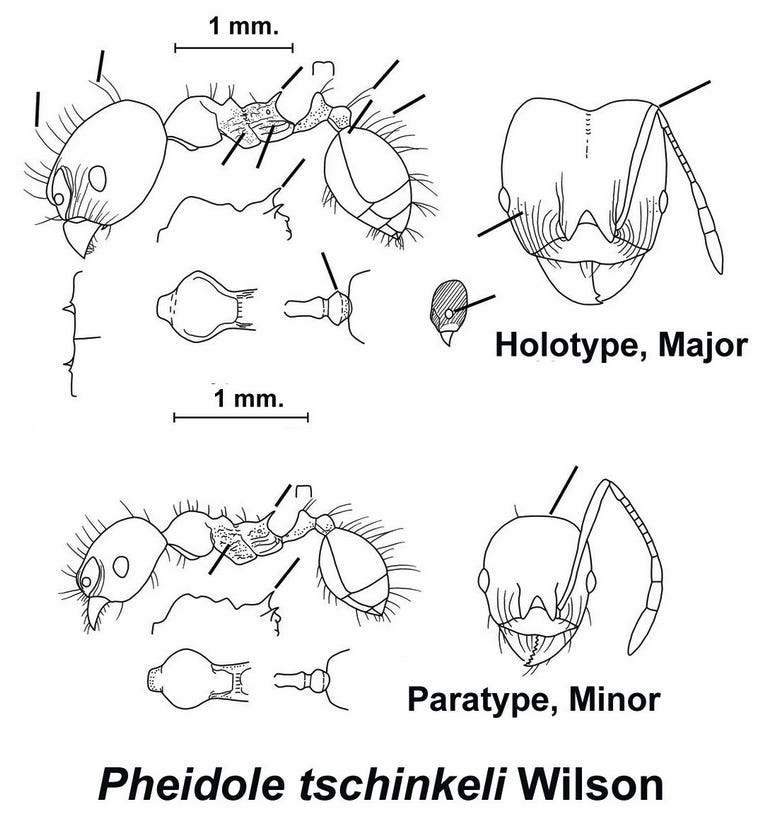
And so it is that whenever someone discovers a new species, he or she still selects a single individual to describe. If it is a new species of tachinid fly, it would be pinned with a number two insect pin, and one of the labels on the pin would be blood-red, designating it as the holotype, the basis of the whole species. If the new species were an ant, it would be glued to a little paper triangle by its coxae, then pinned with the red-labeled pin, and if it were a new species of human, I suppose one luckless specimen would have to be pickled in a large jar of formalin, or prepared as a study skin and kept in a drawer with mothballs.
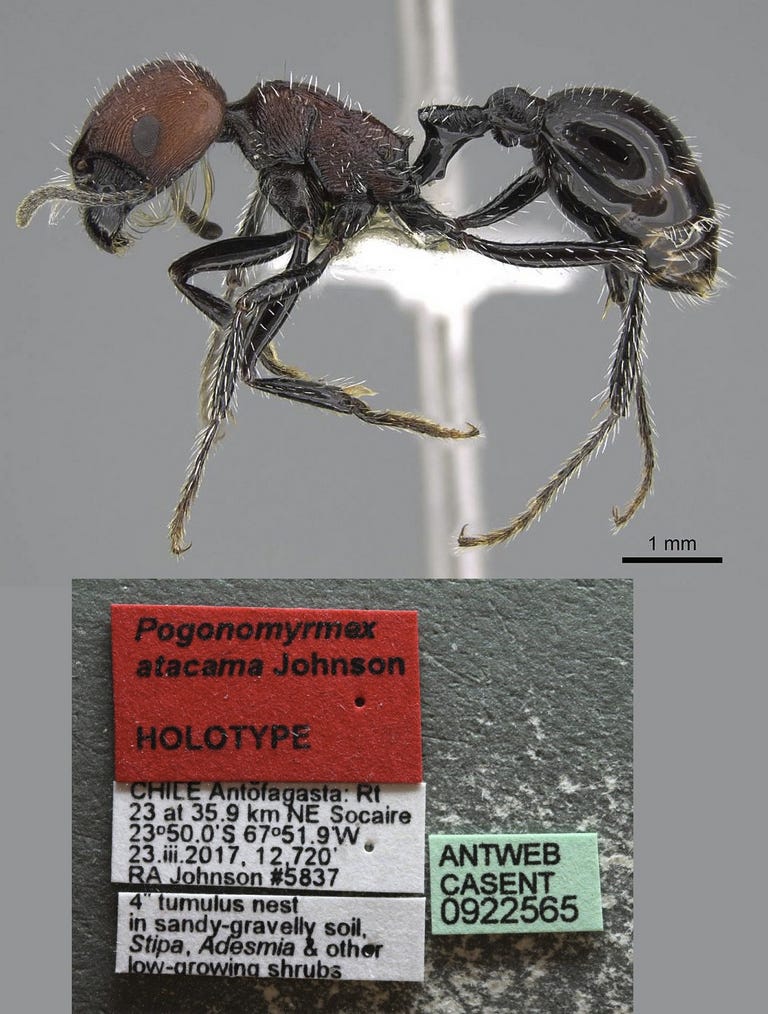
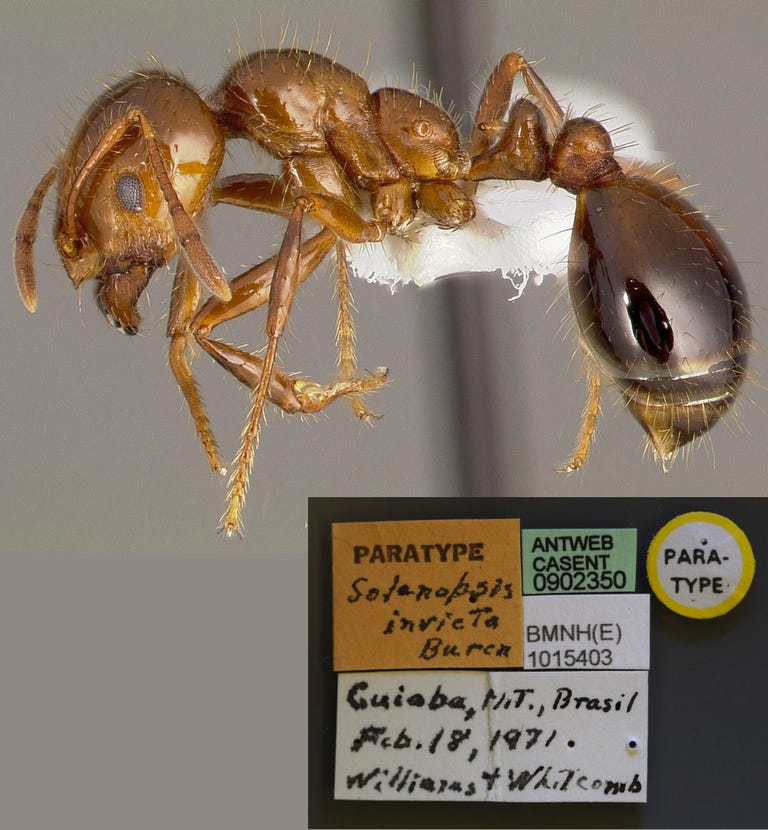
It seems a bit risky to base the recognition of all the members of a particular species on a single individual. Perhaps in response to this, or perhaps simply to deal with the arbitrariness of choosing the holotype, the taxonomist designates all the other specimens in the same study series as paratypes.
If the paratype is of the opposite sex as the holotype, we have the pleasure of referring to it as an allotype. Sometimes a taxonomist will describe a species without choosing a holotype out of the series of specimens before him. In that case, all the specimens in the series become syntypes, a sort of default punishment for the sin of being so forgetful. These used to be called cotypes too, a usage that is now archaic. If the author later attempts to rectify his oversight by choosing one of the syntypes to serve as the basis for the species, this specimen becomes the lectotype, and the ghost of Linneaus once again smiles on the author from on high. The poor, shunned co-specimens that are not honored with the status of lectotype, receive instead the also-ran name of lectoparatypes, a bitter fate.
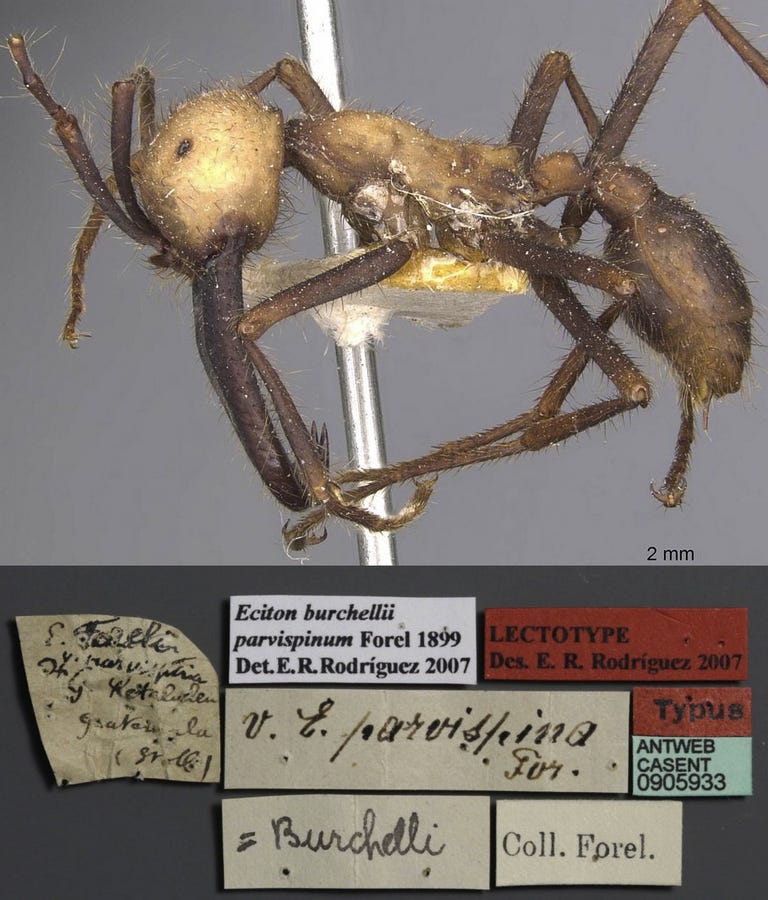
Usually, authors label the holotype as such, and publish the place where it is stored. This makes that specimen an explicit holotype. Sometimes authors forget to do this (they are human), but it is still obvious which specimen they looked at because there is only one. Then this specimen becomes the implicit holotype. Should the holotype become broken and its pieces separated, the pieces are magically transformed into merotypes, an example of reproduction after death. Or say the author chose as holotype a specimen that, it later turns out, does not display certain characters essential for taxonomic separation, he may designate an epitype, a specimen that displays those essential characters. This is not considered a demotion for the holotype. Unauthorized removal of a type from one museum to another converts it into a kleptotype (yes, it happens!). Perhaps the author works on a cloning organism that produces genetically identical offspring or elements. Then he is in a position to designate these as clastotypes. In most museums, specimens are given accession or collection numbers, creating an opportunity for establishing arithmotypes--- all specimens bearing the same number (whether they are the same species or not).
Finally, what if something should happen to the holotype, paratypes, allotypes, syntypes, cotypes and lectotypes? Tiny insects on pins, or dry study skins in drawers are no match for the ferocity of modern war (or old-fashioned war, for that matter), the vagaries of fires or the appetites of skin beetles and clothes moths. Many types of all types have disappeared through World Wars, accident or poor janitorial service. In such a case, an author can still designate a specimen from another series of the same species as the neotype. And in cases where we are forced to work with drawings or photographs of type specimens, we are dealing with iconotypes. In a nod to modernity, the name phototype is even allowed. When not even this is available, and the taxon is based only on a description, we finally arrive at a type without substance, a type in its most abstract form, the typotype. This is pretty close to Linneaus’ own conception of a type.
Having chosen the holotype, the specimen must now be described and named. Describing and naming a new species is one of those pleasures of discovery a taxonomist lives for. A new specific name must be chosen (or a new generic one if needed), and the taxonomist appends his own name as the author. For example, when Bill Buren decided that the fire ant he was studying was a new species belonging in an existing genus, he created Solenopsis invicta Buren (thereby memorializing that the ant had survived three wars against it).
Most species names are descriptive of the specimen at hand, and so we get parva or grandis or nigra, or they indicate the place where the creature lives, such as floridanus, or michoacanensis. Species may also be named for people, most commonly for the collector of the new species, for example, Pheidole tschinkeli Wilson.
But a taxonomist can also honor a person he or she admires. This gave us Mastophora dizzydeania, a spider that catches its prey by swinging a sticky ball on a thread. With some careful thought, he can even insult his enemies in the same manner, as was done by the taxonomist who named a species hotchkissianus after his loathed enemy, Hotchkiss. Linneaus himself, as a Swede, surely knew what he was doing when he named the brown rat, Rattus norwegicus, in honor of his neighbors to the west. Sometimes the intention is positive, but the author overlooked something important, as in the case of Neumoegen, who named a moth Dyaria, “in honor” of the great entomologist, Dyar. It seems doubtful that Dyar was amused.
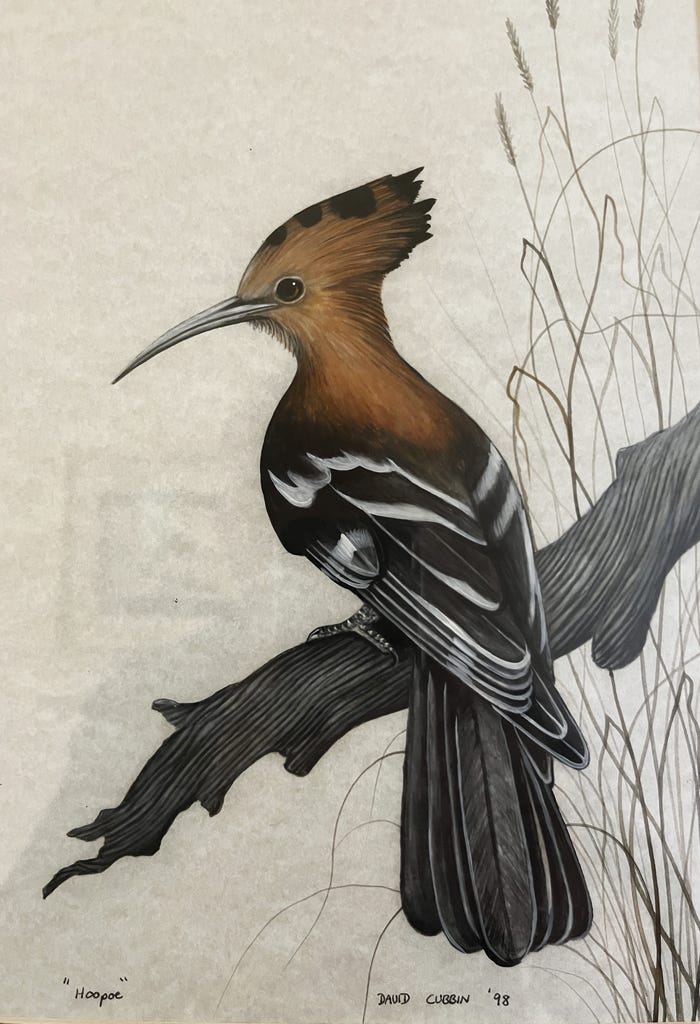
Scattered among the thousands of dry, routine names chosen by taxonomists, there is also much playfulness and whimsy. Who can resist the percussive rhythm of the hoopoe bird’s scientific name, Upupa epops?
Who is not amused by the insult in Z. morio or Stupidogobius? When Estes created the genus, Cuttysarkus for a fossil lizard, was he telling us something about the lizard, or his own fondness for things Scottish, or Scotch?
The humor in Pepsis cola is surely far from timeless, and will push no chuckle-button in the post-Pepsi era or in Pepsi-free zones of the world (if there are any). The same fate will probably also befall the fossil snake, Montypythonoides riversleighensis, or the midge, Dicrotendipes thanatogratus (The Grateful Dead). Some references are already obscure because the expressions are no longer in fashion. This would include the chigger species, Trombicula fujigmo, based on a World War II acronym standing for, “f--- you, Jack, I got my orders”. On the other hand, their musical congeners, T. doremi and T. fasola still ring a bell. And then, one does not have to be tied into pop culture, or even speak English to raise an eyebrow over Pinus erecta, Pinus rigida and Pinus flexilis. Does it reduce the humorous effect to suspect that the authors were probably not trying to be funny? Or were they? And one would want to see the credentials of the taxonomist who named the moth, La cucuracha.
In the case of Aha ha (Menke), there can be little doubt about the humorous intent--- the name is on the author’s license plate. Better this for a license plate than his other creation, a sphecid wasp named, Pison eu Menke. There is also little doubt that humor was on McAlpine’s mind when he named a new genus of fly This. The poster on his office door shows the fly, with the statement, “Look at This!”
Word play is another good source for whimsical names. Once the carabid genus Agra was created, it was only a matter of time before there was Agra vation. It may have taken a sharper eye, but Phthiria relativitae (a fly) may have been equally inevitable. Perhaps it was frustration that led Kovalev to the name a “difficult to see” fossil fly Dissup irae.
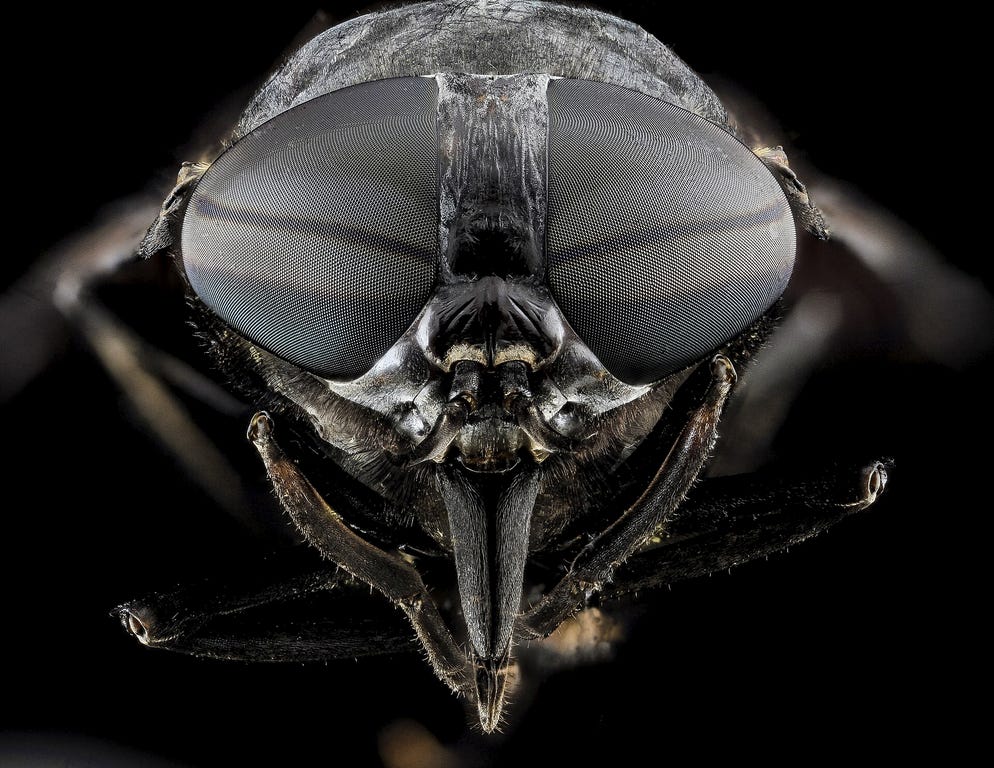
Vernacular expressions can also be a source: the deer fly, Chrysops balzaphire probably hurts when it bites, and we can presume that the horsefly Tabanus rizonshine is active in the morning. Less obvious is that Tabanus nippontucki was named during the Japanese attack on Pearl Harbor.
There is also the predictable battle for first and last in the list. It seems unlikely that anyone will beat out the mollusc, Aa for first place, but the existence of Zyzza, Zyzzyva, Zyzzyx, Zyzzyxdonta and Zyzzyzus suggest that a mighty battle was waged for last place.
Of course there is a police force to assure that this naming game doesn’t get out of hand. Every name must be submitted to the International Code of Zoological Nomenclature for approval. Evenhuis originally proposed to name a fossil chaoborid fly, “I” as the genus name. Although this is allowed by the ICZN rules, a colleague who also worked on these flies told Evenhuis that he never wanted to have to write in a paper that “I have small male genitalia”, so Evenhuis changed it to Iyaiyai. On the other hand, Dybowski failed to win approval of the name he chose for an amphipod from Lake Baikal, Gammaracanthuskytodermogammarus loricatobaicalensis. I wonder why?
At one time, this playfulness and humor circulated only among taxonomists, informally, like a West African oral tradition. With the advent of the internet, these pleasures have been shared with the world on several websites. If you are a serious taxonomist who has no use for such frivolity, you can always call upon the snail, Ba humbugi to express his opinion.
Great fun and educational, too. In my youth, one of my Italian-American pals frequently shouted, "Uppayounose widarubbahose!' I wonder what creature would fit that name?
Starting my Friday morning with some terrific giggles and laughs and, of course, a great lesson! Thanks Walter!