Fire Ant Barbecue
correlation or causation?

I spent a good deal of my scientific career sorting causation from correlation. Humans (and other animals) evolved to detect patterns of things that vary together, because when they do, one might be the cause of the others. In any case, if things reliably occur together they have predictive value, so does it matter which is cause and which effect, or whether they associate by random chance? Most people are quite ready to accept causal relationships if they seem to make sense, even in the absence of experimental tests in which the putative cause is varied and the response of the dependent variable is measured. That’s a lot of trouble, so why bother?
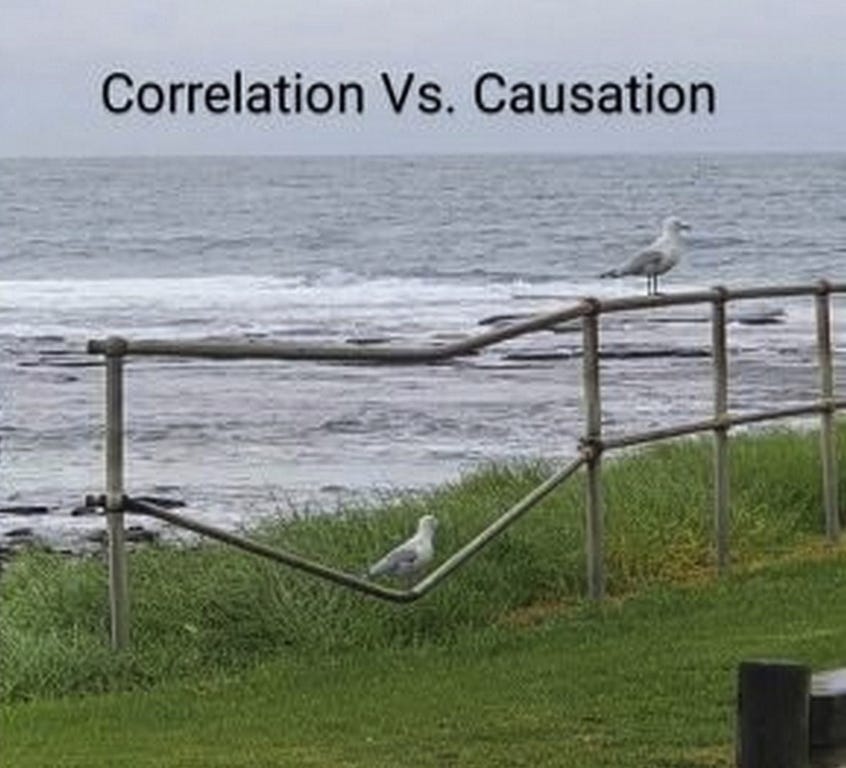
In the age of powerful computers, one can correlate any variable with any other variables, so-called data mining, and because of the endless mountains of online data, you can reap a bountiful harvest of spurious correlations that make no sense whatsoever. You can amuse yourself by checking out this website, to discover that there is a 96% correlation between the number of civil engineering doctorates awarded and the per capita mozzarella cheese consumption in America. Or a 95% correlation between the marriage rate in Kentucky and the number of people who drowned falling out of a fishing boat. And for a visual example, I offer the amazing gull below.
Correlation is often the source of superstitions, both for humans and animals. At feeding time, our three cats always gathered at our feet and one of them, Chit’lins, always engaged in “intense milling behavior”, rubbing back and forth against my ankles while I prepared the food. One day, out of curiosity, we deliberately shut her in another room, and behold! one of the other cats performed the milling behavior. We tested this several times, and each time, one of the other cats took over. One of my undergraduate students did the same study on three different households that had three cats each, and found similar results. The cats, having taken note of the high correlation between milling and feeding, concluded that the ritual of milling was the cause of feeding. Quite logical, really. The ritual probably also gave some feeling of control—- no milling, no feeding. Many of us would have done the same, and few of us (other than pointy-headed scientists) would have done the crucial experiment of “milling vs. non-milling.”
Of course our lives are replete with correlations, and most of the time, it doesn’t matter much whether the correlation has an embedded cause, but sometimes it does. The entire point of blind clinical trials with placebo controls is to determine what part of the effect is caused by the drug treatment. The FDA and NIH do their best to figure out how much of the correlation is “the cat effect” (aka the milling ritual) and how much is the drug treatment.
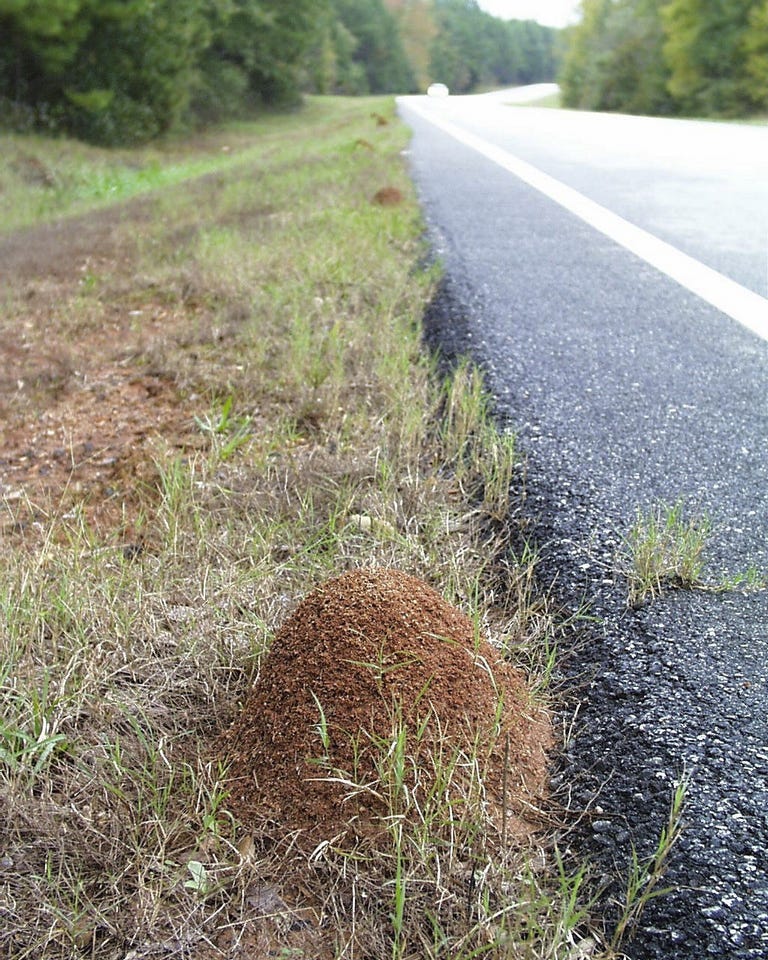
After the exotic fire ant, Solenopsis invicta, made land in Mobile in the mid-30s, it became associated with a lot of confusion over correlation and causation. It was an almost universal belief that this was The Ant From Hell, and that it wiped out native ants and other creatures from quail to cows. The basis for the ant part of this belief was that there was a strong negative correlation between fire ant and native ant abundance. With the same logic as our cats, the inescapable conclusion was therefore that fire ants hammered native ants. It took Josh King and me more than six years and several hundred thousand dollars of federal grants to show that this conclusion was rubbish, and that the culprit was human ecological disturbance, to which native ants were poorly adapted, but fire ants were supremely adapted. In other words, the same cause (ecological disturbance) hammered native ants and favored fire ants. Same cause, opposite effect, and therefore a negative correlation between fire ants and native ants. Our cats would have made the same mistake, perhaps, though I’d like to believe that Xanthia would not.
This mistaken logic was not harmless. Once the government Fire Ant Warriors understood that broadcast pesticide application killed all the ants, not just fire ants, and that the fire ants resurged much more quickly than the native ants, native ants became the Saviors that would rescue people from the Fire Ant Scourge. Here again was the assumption that the fire ant was a superior competitor, and that by “helping” native ants, fire ants would be suppressed. The state of Texas (of course!) had a veritable propaganda campaign urging Texans to be nice to their native ants. But as Josh and I showed so clearly, habitat and disturbance are the main determinants of ant communities, and once you whack the native ecosystem, you’ve made the world safe for fire ants, and disastrous for most native ants. When Josh and I removed fire ants from pasture habitat (a highly disturbed habitat in most of the USA), the abundance of native ants did not change. Indeed, most of the ants that occurred together with fire ants were also exotics that also depended on ecological disturbance.
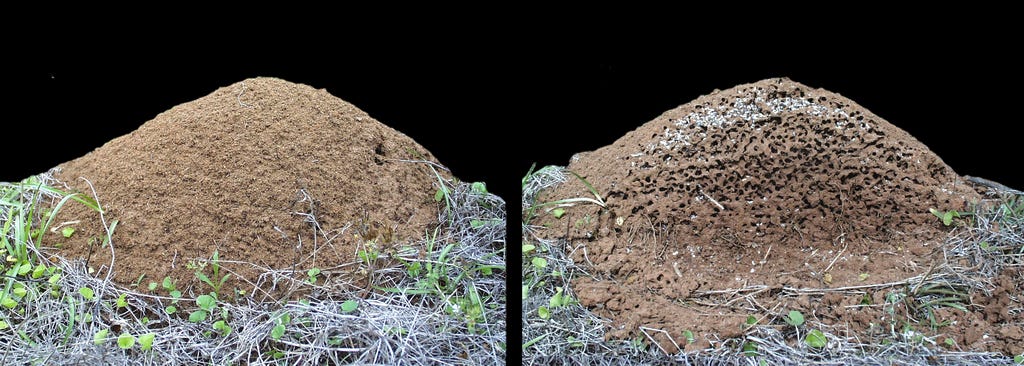
So you can kind of see why I was such a stickler about separating correlation from causation, and why I might want to emphasize this point in the education of the students under my care. Clint Penick was one of my excellent undergraduate students with a passion for biology, even though he began college as a creative writing major. In addition to this distinction, he played in a punk rock band and had a leg tattoo decades ahead of the “tat-epidemic.” He wanted to do an Honors Thesis under my direction, and I suggested that for its educational value, he test one of the most general, obvious correlations-assumed-to-be-causal, namely, the movement of brood by fire ant workers into their mound during cold but sunny winter mornings. This placement is easily demonstrated by cutting a mound in half on such a morning, as in the image below. All of the brood is located immediately below the mound’s surface, as in the image below.
A long time ago, my graduate student, Sanford Porter, had shown that the mound fire ants build over their subterranean nests acts as a solarium that warms in the morning sun in the winter, extending the brood-rearing season. By building mounds, fire ants can rear about 15% more brood annually compared to not building a mound, and that translates into larger colonies and higher fitness. He also showed that the optimal temperature for larval development was 32 degrees C when well fed, but cooler when underfed. Workers are clearly endowed with sensitive thermometers.
Perhaps you think it’s obvious that the workers were responding to warmth and it wasn’t worth the effort of running an experiment. That would be thinking like a cat, not a scientist, and I was trying to train a scientist. So, Clint’s challenge was to determine which, if any, of several correlated variables (sunlight, radiative warmth, temperature, time of day) caused workers to move brood into the mound. To do so, he had to vary each possible factor independently of the others, and determine to which one the workers were responding. How hard could it be?
Like most scientific studies, his started with a description. By burying “i-buttons” in the mounds, he recorded the temperature every 10 minutes on the north and south sides of the mounds, as well as the air and non-nest ground nearby. Because Tallahassee is in the northern hemisphere at 30 degrees N, the sun’s daily arc is to the south and the south side receives more direct sun.
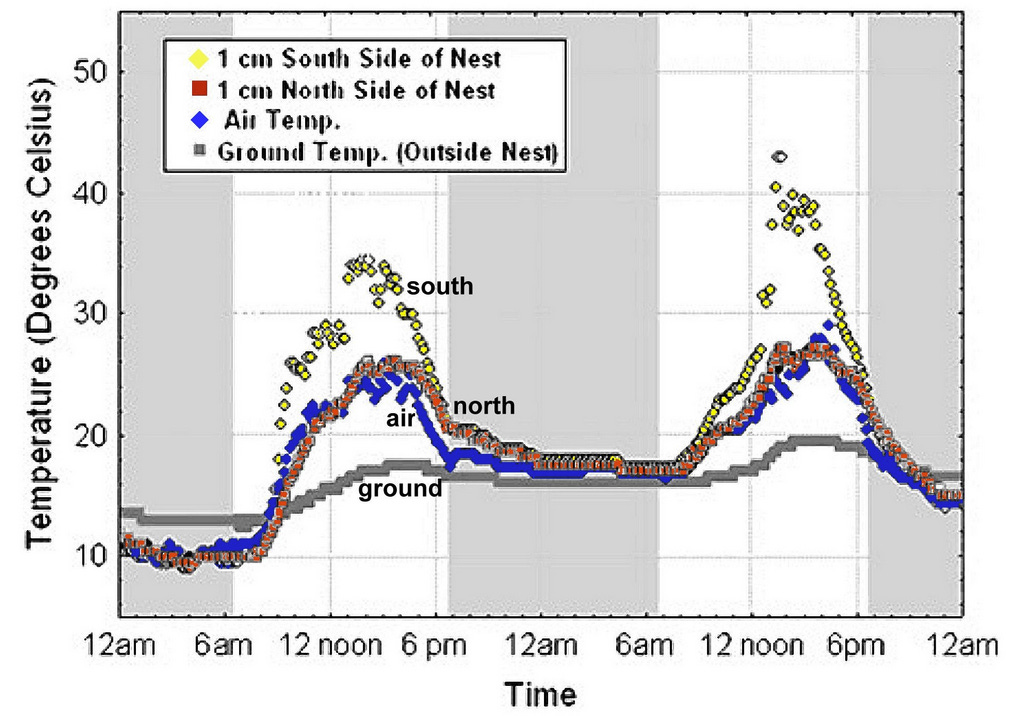
The graph above shows that the south side of the mound warmed much faster than the north, which warmed at the same rate as air. In other words, in the absence of direct radiation from the sun, the mound was warmed indirectly by air. But this graph also shows something easily missed, specifically, that although the soil surrounding the nest mound is irradiated by the sun for the same period, it warms very little during the day. Why the difference?
Although Clint did not test this in an experiment, he knew the answer from high school physics. First, because the mound was honeycombed with galleries, its bulk density (mass) was much lower than the mound-less soil, and therefore, it took fewer solar calories to raise its temperature. Second, the angle at which the sunlight strikes a surface determines the energy per unit area. This energy “density” is related to the cosine of the angle and is maximal when the sun is 90 degrees to the surface, and decreases to zero when the surface is parallel to the sunlight. Third, the soil of the mound is usually drier than the surrounding soil, so less energy goes into evaporating water rather than warming the soil.
This clarifies the energetic benefit from building a mound—- the sides of the mound have less mass, are drier, and for the south face, are at a higher angle to the incoming light. By burying i-buttons at different depths, the record showed that warming was most rapid just under the surface (1 cm), much slower at 5 cm, and very little at 40 cm. The sun’s heat is transferred only at the surface and moves downward by convection or conduction, both slower processes. On cloudy days, mound warming was very modest at all depths.
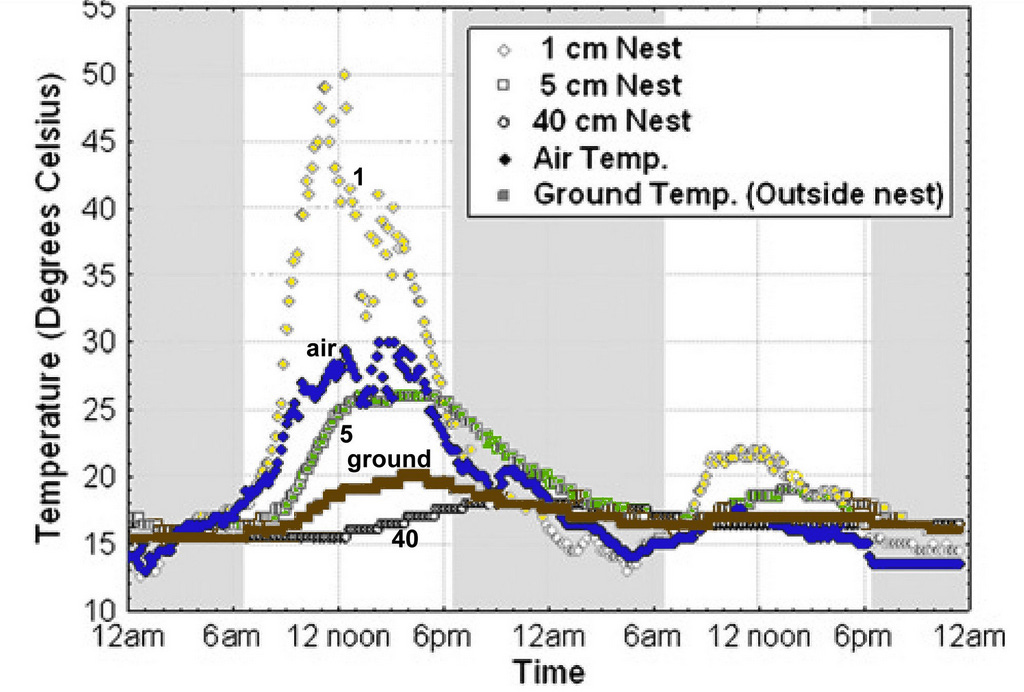
OK, so much for the physics. How did the movement of brood correlate with these temperature patterns? Because Clint couldn’t see through the mound surface to see where the workers put the brood, he made a “standard spoon” device with which he could extract small standard samples from several depths. The basic data are thus the number of brood in each sample in response to the treatments.
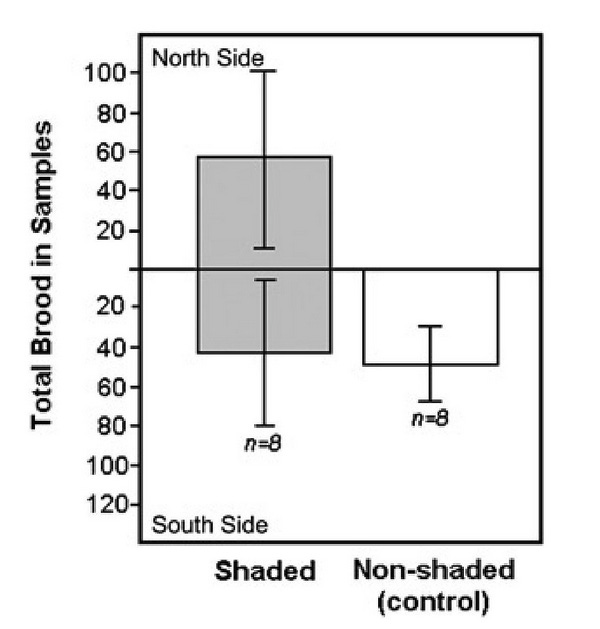
If the sun, and not correlated variables, especially air temperature, is the direct cause of brood movement, then shading a mound should affect the north-south brood distribution because both sides would more or less track the air temperature. And it does—- in shaded mounds, brood is equally distributed between the north and south sides, whereas in the non-shaded controls, it is almost all on the south side.
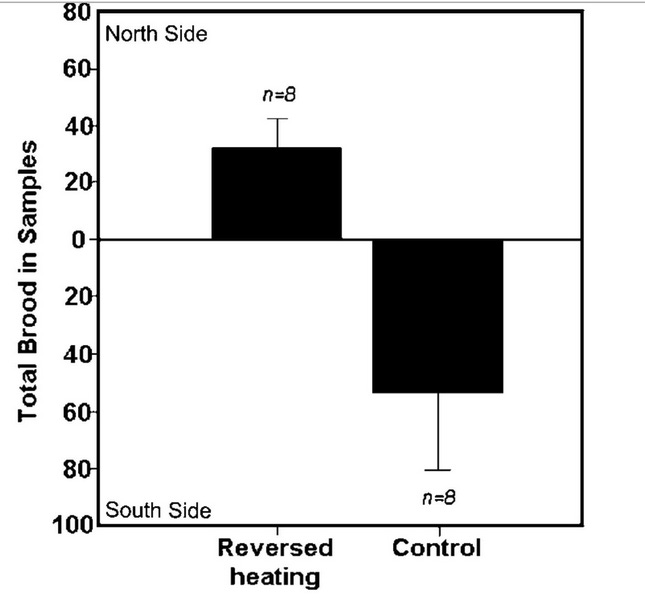
Sunlight, in contrast to air temperature, is directional. Thus, Clint reversed the direction of the sun by shading mounds and mirroring the sun from the north. In response, the brood were almost all on the north side, whereas in the unreversed control, they were on the south side.
This is all well and good, and it looks like the case for the sun’s warmth being the cause of brood movement is pretty strong. However, ants are living animals, and all creatures undergo cycles that are entrained by the night-day cycle. What’s to say that the ants aren’t moving brood on an entrained daily cycle, and that they would do it in in constant light or darkness, the classic test of a circadian cycle?
Clint couldn’t alter the day-night cycle for this test (no kidding?), and he couldn’t easily move colonies into constant light or dark. But he could provide heat out of sync with the solar cycle. This wasn’t that hard to do—- he set up a grill over each mound, and in the middle of the night, put a layer of burning charcoal briquettes on each grill, high enough above the mound that most of the heating was radiative, not convective or conductive.
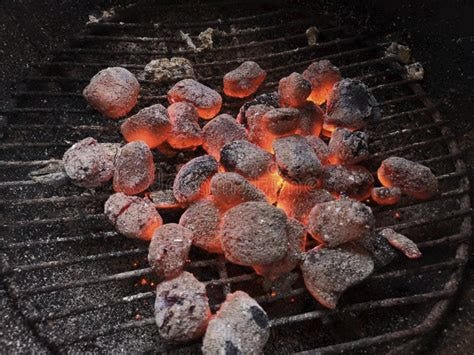
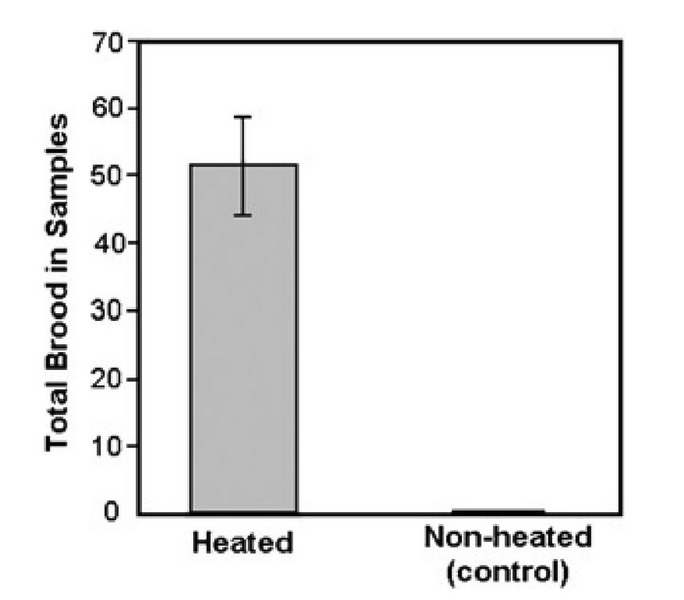
His nocturnal efforts paid off. Whereas no brood were brought up into unheated mounds, workers carried abundant brood up into the charcoal-heated mound, placing them just under the surface. Thus, the ants were not the puppets of an entrained circadian rhythm, but were responding directly to the heat. Because all the radiation from the charcoal was at the red and infrared end of the spectrum, it suggested that this part of the sun’s radiation, not shorter wavelengths, was the source of solar heat.
These simple experiments thus teased apart several correlations and put a finger directly on an immediate cause. Maybe our cats would eventually have come to the same conclusion, but maybe they would have been satisfied with the general correlation. Like all science, these experiments still leave a lot of questions unanswered, but also like all science, the questions are answered one at a time, often working down from general to more and more specific. And also like all science, it raises additional questions, such as how do workers deep in the nest detect the warm mound? How sharp a temperature gradient can they detect? Through what sensory mode? What switches on their brood shuttle mode?
Clint went on to pursue his passion for biology and ants in graduate school at Arizona State University, then did tours as a postdoc and beginning faculty before coming to roost in a faculty job at Auburn University in Alabama where he continues to pursue his passion for ant biology. His career is evidence of a wider view of the world. When most ant biologists yearn for habitat untrammeled by humans, Clint zoomed in on the ant fauna of Manhattan, a focusing on the relationship of ant ecology and human ecology. I don’t know if he still plays in a punk rock band, and I don’t know if he has added more tattoos to his epidermis, but he is well-launched as an ambassador between the world of humans and ants. And I’m pretty sure he knows the difference between correlation and causation.
I read this from my hotel room in Florida, where I'm getting ready to play a 20 year reunion show with my old punk band. So yes, I'm still playing punk!
And I just shared this with my undergrads who are also doing research on fire ants this summer—the ant that keeps on giving.
“The cats, having taken note of the high correlation between milling and feeding, concluded that the ritual of milling was the cause of feeding.”
When Skinner was doing his studies of the effect of incentives on behavior (now called “behavioral economics”!), he noticed that some of his rats and pigeons developed little rituals that he called “superstitious behavior. Whatever an animal is doing when they get a reward will increase in frequency (the “law of effect”). Only the bar press really “caused” a food pellet to drop. You can see the same thing with people playing the slots at Vegas!