Cutting Losses
Facing reality

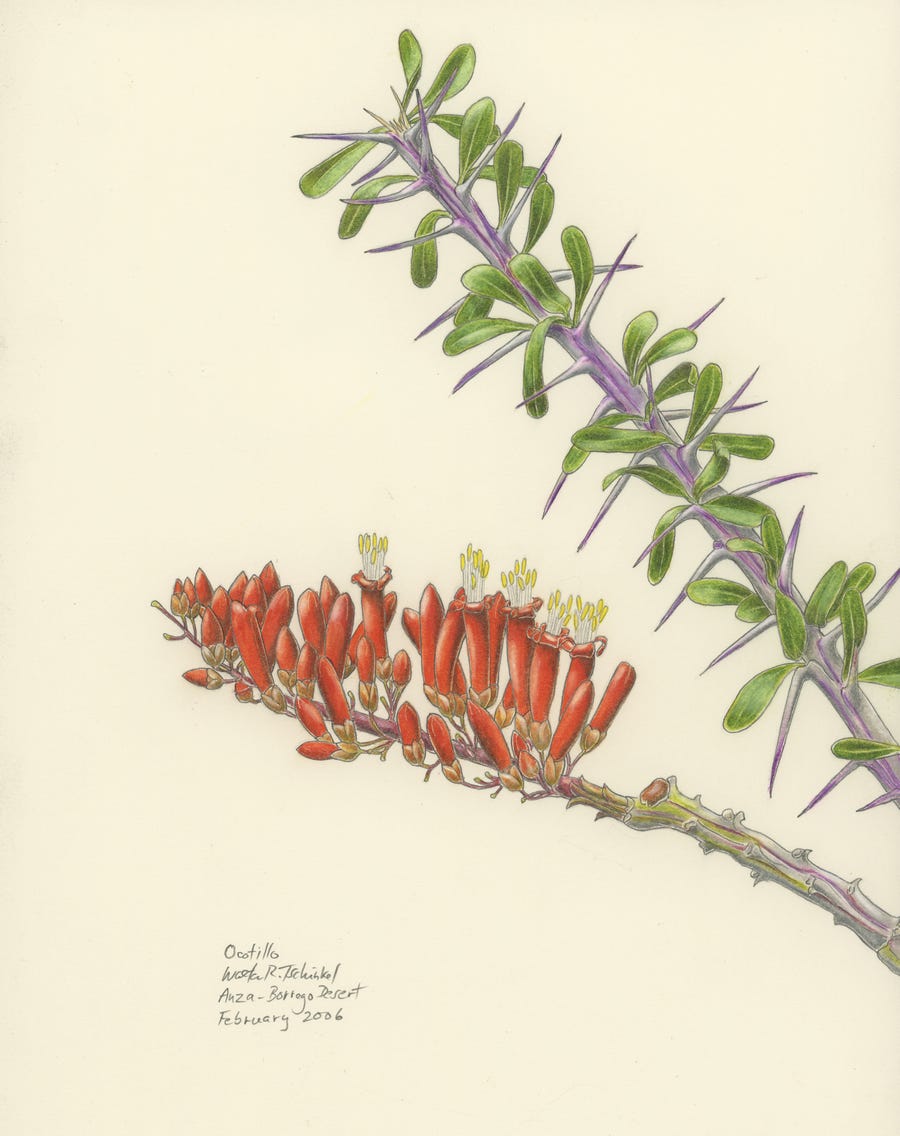
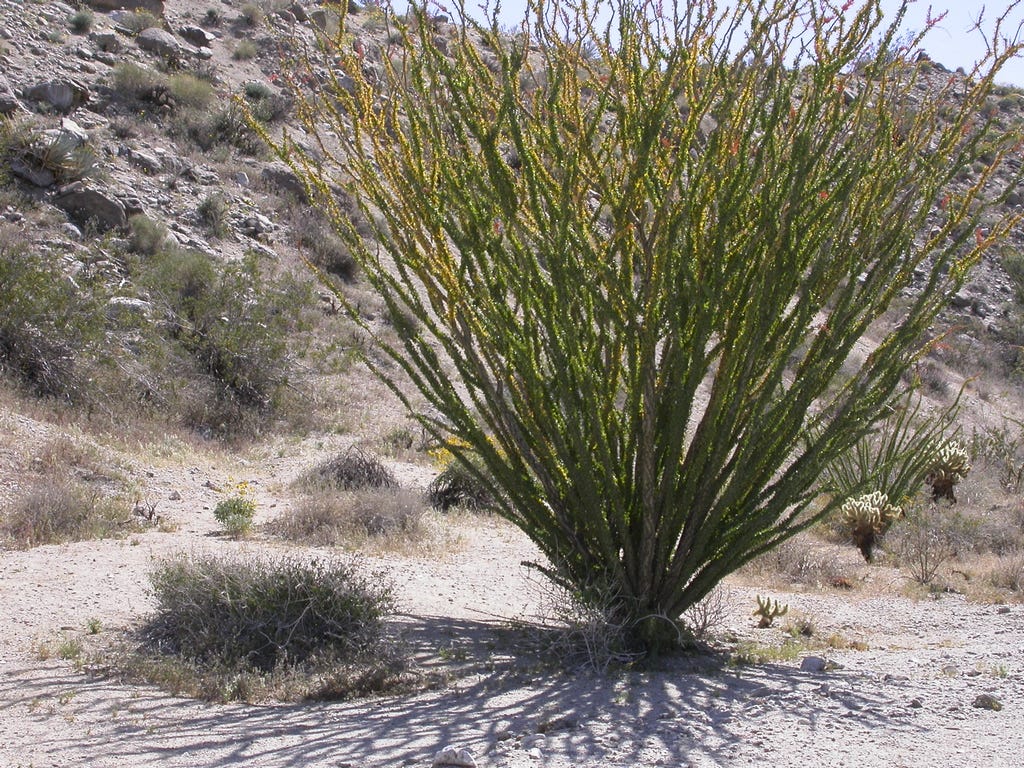
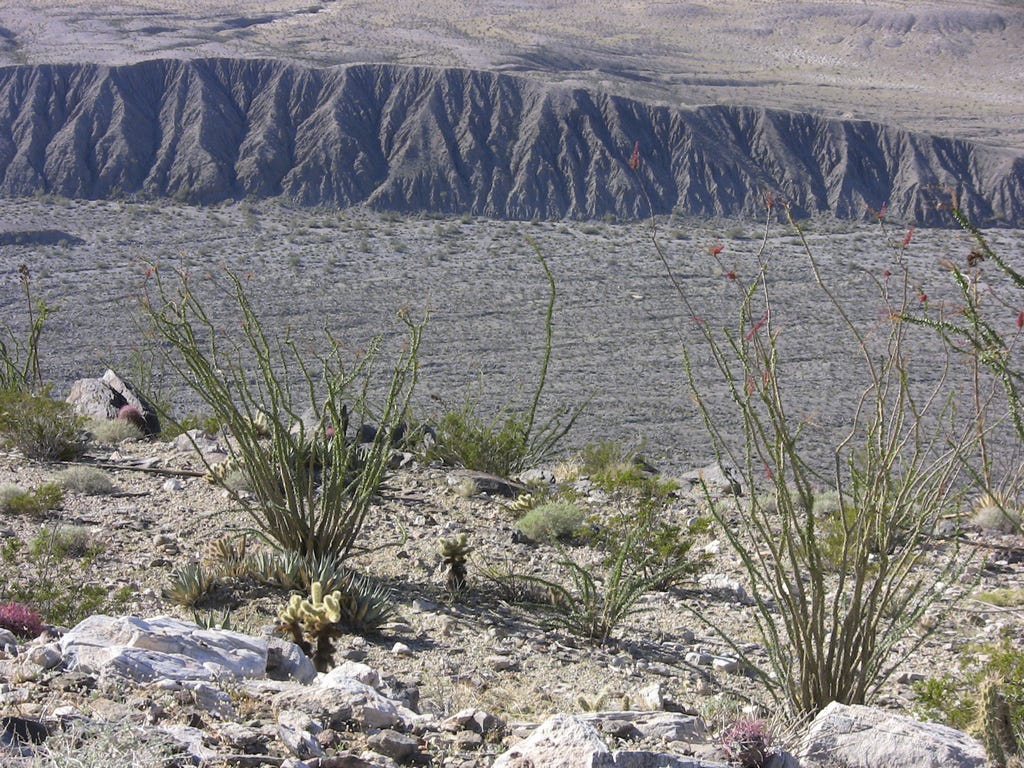
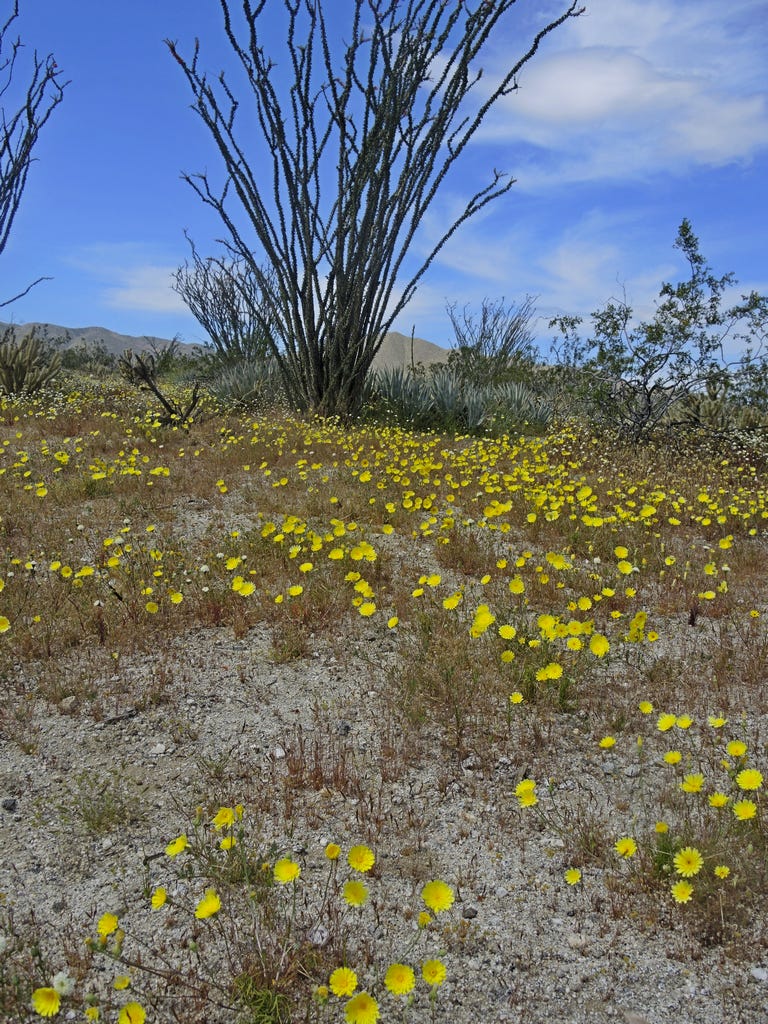
Ocotillo is a peculiar plant that looks like a bundle of spiny sticks stuck into the ground to wave in the wind, sometimes with beautiful scarlet flowers on the branch tips. Living as it does in an unpredictable desert climate, it must take whatever is coming, and make do in between, and as a result, it has become an unsentimental sort of plant that shucks whatever isn't currently useful anymore. Admittedly, shedding useless parts is something all plants do--- bud scales, spent flower parts, autumn leaves, infertile fruits, and so on, are all shed unceremoniously when their time is upon them. But for ocotillo, these sheddings and shuckings seem more like real decisions, not some normal seasonal or developmental events. Even a brief survey in the Borrego Springs area suggests that among ocotillos, opinions about when and what to shed vary widely. One ocotillo will be fully in leaf, with green at every spine axil, while the leaves of its neighbor a few meters away are yellowing and soon to be jettisoned, and another neighbor is completely leafless. Decisions about when to flower seem similarly personal decisions. Some ocotillos bloom while fully in leaf, while others are completely naked of leaves.
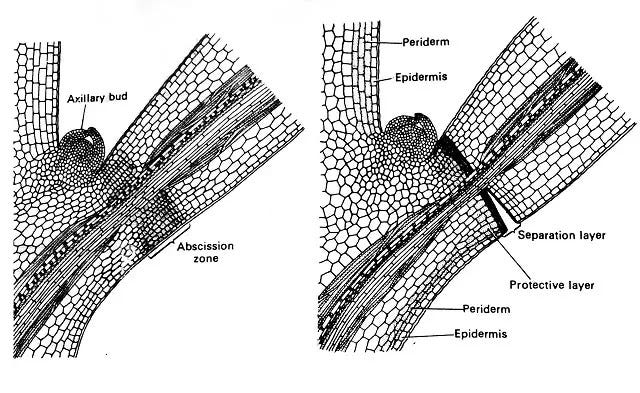
So, getting to the details, it isn't too hard to figure out why plants shed parts, but how do they do it? Plants have no tiny pruning shears, no fingers to pinch off leaves or flowers. The way it works is that plants form a special separation layer where the leaf joins the stem, or the flower parts are attached to the rest of the plant. The formation of the separation zone is controlled by hormones, and consists of two layers of cells, a top layer with enzymatically weakened cell walls, and a bottom layer in which the cells expand, breaking the bond between the two layers. Sometimes this is accomplished by filling the bottom layer with cork. The formation of these separation layers seems to occur when the leaf is no longer doing its job and photosynthesis is greatly reduced. For ocotillo, this would follow a prolonged dry period, or perhaps cold weather, or season, or all of the above.
The tubular scarlet flowers of ocotillo are pollinated by hummingbirds and large, native carpenter bees. Successful pollination starts the growth of the seed capsule, but many flowers fail to be pollinated, and for that matter, the plant only has resources for a limited amount of seed production, so both unpollinated and sometimes pollinated flowers are given the separation-layer heave-ho. Flowers may be beautiful to us, the hummingbird, and the carpenter bee, but to the plant, they are purely utilitarian, and a plant's gotta do what a plant's gotta do.
Ocotillo is of my favorite plants, and your illustration of it is wonderful, Walter.
I love following your travels. Or past travels.